ELN vs LIMS: What's the Difference

ELN or LIMS — which does your lab actually need? Explore the key differences and choose the best digital solution for your life science research workflows.

April 15, 2026
()
min read
A laboratory

Download Whitepaper

By submitting this form, you agree with our Privacy Policy.
Thank you! Download the file by clicking below:
Download
Oops! Something went wrong while submitting the form.

Table of Contents

Thank you! Your submission has been received!
Oops! Something went wrong while submitting the form.

Table of Contents

TL;DR

  • ELN is for documenting experiments, notes, and research workflows, while LIMS is for managing samples, configurable tracking, and lab operations at scale.
  • ELN is flexible and supports collaboration, while LIMS enforces configurable sample tracking with custom metadata, audit trails, and automated triggers.
  • LIMS is better for high sample volume and regulated environments; ELN is better for evolving research workflows.
  • Many labs use both together to connect research documentation with sample and inventory management.
  • The right choice depends on your lab’s workflow, data structure, and compliance needs.

Every scientist knows the frustration of digging through Excel spreadsheets and paper notebooks in search of experimental data, forgotten details, or reagent locations. As we’ve discussed before, digitizing your lab is how to get around these troubles.

However, understanding the different digital lab systems and their acronyms can be confusing.

You may have noticed that most digital platforms for the life sciences fall into two categories: Laboratory Information Management Systems (LIMS) and Electronic Lab Notebooks (ELN). On paper, they sound the same, but there are major distinctions between them. In this blog post, we’ll explore ELN vs LIMS, explain how the systems differ, and provide guidance to help you choose the right solution for your lab.

ELN vs LIMS: Everything you need to know

Understanding how ELN and LIMS function helps laboratories align tools with research, sample management, and compliance workflows.
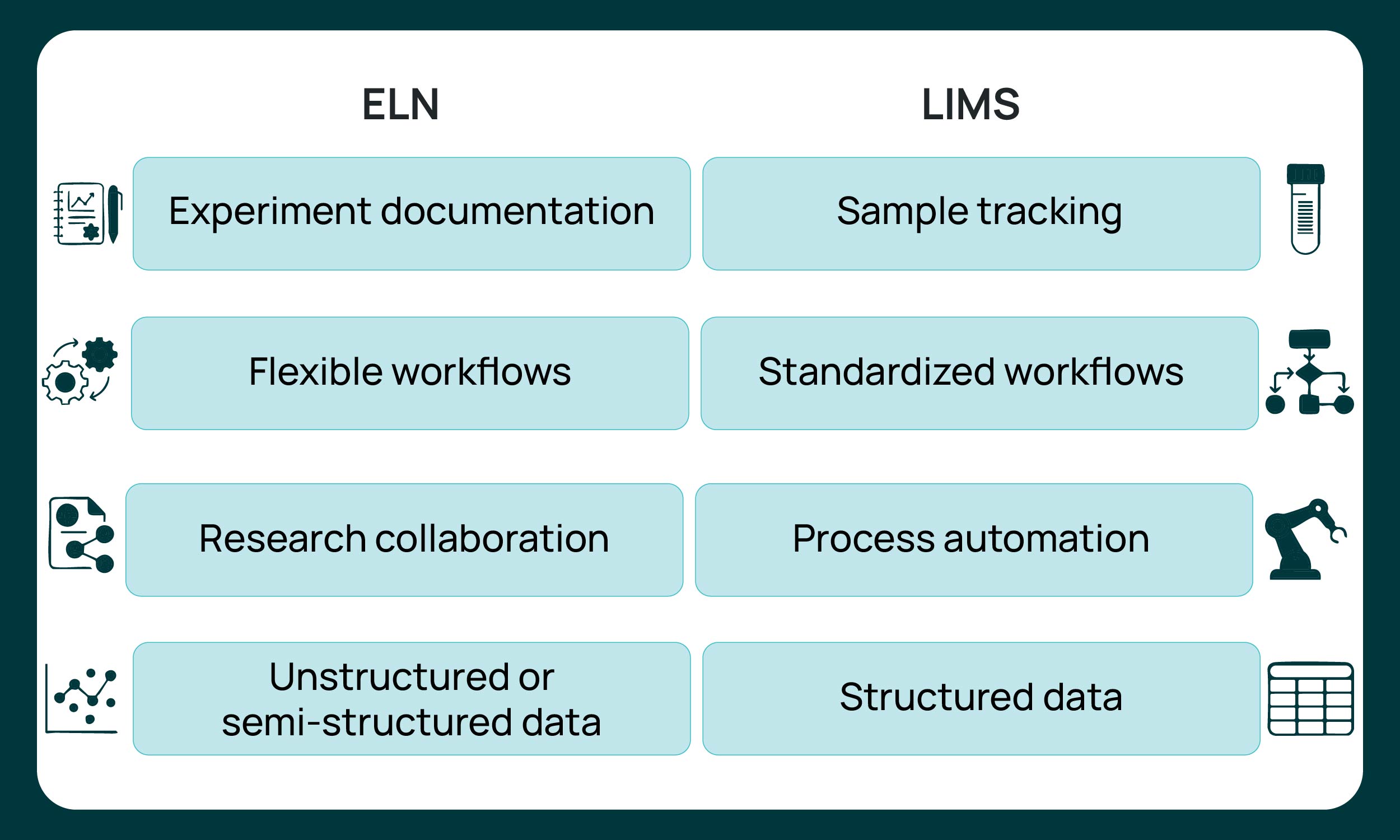
Table comparing ELN vs LIMS

What is an ELN?

An ELN is a software platform designed to record and manage data, observations, sample information, and experimental methods that one would conventionally record in a paper lab notebook. ELNs are an excellent solution for keeping up with growing regulatory pressures to maintain data integrity and security. Moreover, they allow you to easily collaborate with team members, record experimental observations, integrate with instruments, create detailed reports, and search using simple keyword queries.

Benefits of Using an ELN

  • Searchability: Given their digital nature, entries into ELNs are easily searchable, which makes them very time-efficient.
  • Easy collaboration: ELNs allow labs to share data, notes, and images with colleagues, making it an excellent solution for working on projects and experiments with a team.
  • Security: ELNs allow for digital signatures, so sign-off on projects and experiments can be done easily and securely.
  • Traceability: ELNs provide a comprehensive audit trail of all actions taken within the system, making it easy to track who has done what and when.
  • Standardization: ELNs can include a protocol module, enabling you to set up individual or group working templates, making it easy to standardize processes and workflows.
Example of experiment documentation structured in an ELN

What is a LIMS?

In contrast to an ELN, a LIMS is software designed to manage samples, configurable tracking, and laboratory operations. Modern LIMS platforms, like SciSure’s, are purpose-built for research labs, biobanking labs, and life science R&D environments where flexibility, traceability, and fast configuration matter.

Unlike traditional LIMS built for rigid manufacturing or QA/QC pipelines, a research-focused LIMS gives you the tools to define your own sample types, automate alerts and tasks via event-based triggers, manage equipment and supplies centrally, and dispatch samples between teams with a complete audit trail. This makes the LIMS vs ELN comparison especially relevant for labs that process high volumes of samples and require structured but configurable workflows.
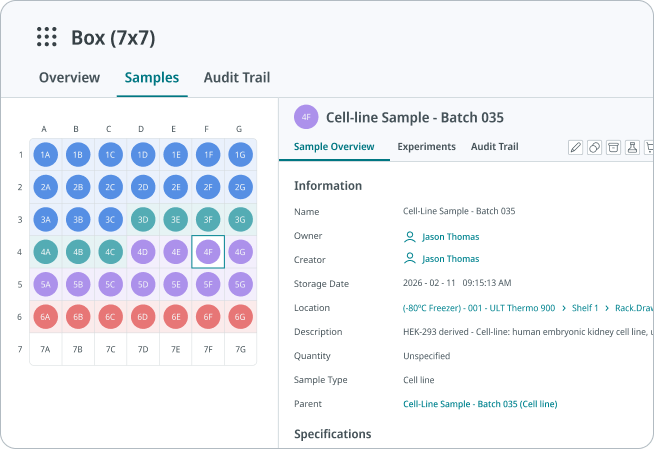
Example of a sample and inventory management interface in a LIMS

Benefits of using a LIMS

  • Configurable sample tracking: Define custom sample types, fields, and views. Track samples via metadata, check-out/check-in, dispatch between groups, and visual lineage trees with multi-parent support.
  • GLP-compliant audit trails: Complete, exportable audit trails across samples, series, equipment, and experiments. Exportable to PDF, Excel, and CSV to support compliance and data integrity requirements.
  • Triggers & automations: Event-based automations (sample created, archived, field changed) and scheduled automations (before/after expiration, custom intervals). Actions include email notifications with smart values, webhooks to Slack/Teams, and auto-task creation, with pre-built templates to get started quickly.
  • Barcode automation: Perform single-sample, multi-sample, and chained actions in a single scan. Supports rack scanning via VisionMate, RackScan, and BioMicroLab for high-throughput sample handling.
  • Equipment management: Custom fields, validation tracking with expiration alerts, booking and planner functionality, status management, and audit trail export.
  • Supplies & ordering: Built-in product catalog and shopping list with a full procurement pipeline (Pending → Ordered → Received → Completed).
SciSure Research
Manage samples and workflows with structure
Track samples, automate tasks, and maintain full traceability across lab operations.
Request a demo

ELN vs LIMS: Where each fits within a lab's process

While ELNs and LIMS are both digital software platforms for laboratory data management, the two have significant differences. ELNs are designed for many of the same functions as traditional paper notebooks — recording experimental protocols — with the added benefits of searchability, data organization, and collaboration tools. LIMS platforms focus on configurable sample tracking, inventory management, and operational efficiency. They are typically used by labs that manage large numbers of samples and require structured but adaptable workflows.

Where each system fits in your lab

Features comparison

When comparing ELN vs LIMS, one of the most practical ways to understand the difference is by looking at the core features each system provides. While both platforms help laboratories manage scientific data digitally, they are built to support different aspects of laboratory work.

An electronic lab notebook is primarily designed to support research documentation and experiment tracking, while LIMS software focuses on configurable sample tracking, inventory management, and operational efficiency. Many modern laboratories evaluate LIMS vs ELN based on which feature set best supports their daily activities.

Capability ELN LIMS
Experiment documentation
Sample lifecycle tracking
Automation Limited Triggers & Automations, Barcode Automation, API/SDK
Collaboration Limited
Data structure Flexible Configurable
Compliance support Audit trails GLP-compliant audit trails, configurable tracking

Experiment documentation and research records

ELNs are designed to capture experimental workflows, observations, and research notes in a structured digital format. Scientists can document experimental procedures, record results, attach images or files, and maintain a complete history of their research activities.

Attach multiple data types to an experiment in an ELN

Key ELN capabilities include:

  • Recording experimental protocols and procedures
  • Capturing observations, notes, and results
  • Attaching datasets, images, and instrument outputs
  • Creating searchable experiment records
  • Supporting collaboration between researchers

This functionality makes ELNs particularly valuable in research-driven environments such as academic laboratories, biotechnology companies, and early-stage drug discovery teams where experiments evolve frequently.

Sample and workflow management

LIMS platforms are built to manage samples and laboratory operations at scale. Rather than focusing primarily on experiment documentation, LIMS systems provide configurable lifecycle tracking via metadata, check-out/check-in, dispatch between groups, and barcode automation, all tied to a complete audit trail.
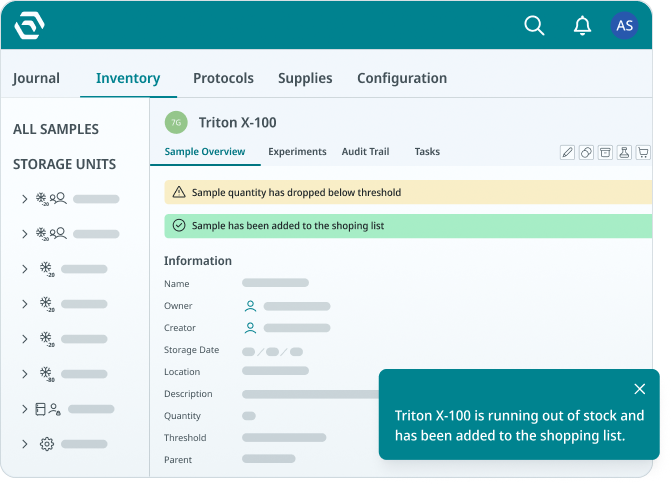
Keep detailed inventory of all your samples and consumables

Typical LIMS capabilities include:

  • Custom sample types, fields, sample series, and shareable views
  • Sample dispatch with accept/deny and full audit trail (custody transfer)
  • Check-out/check-in with user and timestamp logging
  • Visual sample lineage tree with multi-parent support
  • Inventory and reagent tracking via the Supplies module

These capabilities make LIMS well-suited for facilities that handle large sample volumes, such as clinical labs, quality control labs, and biobanks.

Automation and process control

Automation is one area where the LIMS vs ELN difference becomes particularly clear. SciSure’s LIMS delivers a powerful automation story through Triggers & Automations and Barcode Automation, working differently from rigid workflow pipelines.

Triggers & Automations allow labs to:

  • Set event-based triggers: sample created, archived, or a field changed
  • Schedule automations: before/after expiration, at custom intervals
  • Automate actions: send email notifications with smart values, fire webhooks to Slack or Teams, or auto-create tasks
  • Start quickly with pre-built automation templates

Barcode Automation enables single-sample, multi-sample, and chained actions in a single scan, with rack scanning support via VisionMate, RackScan, and BioMicroLab. The open API and SDK extend automation further to connect with external systems and instruments.

While ELNs can integrate with instruments, their primary purpose remains documenting research rather than managing automated tracking pipelines.

Collaboration and knowledge sharing

ELNs excel at supporting collaboration across research teams. Scientists can share experiment entries, comment on results, and access research history from anywhere. This creates a centralized knowledge base that helps teams build on previous experiments rather than repeating work.

By contrast, LIMS collaboration is typically more process-driven. Team members interact with the system mainly through sample assignments, dispatch workflows, and results tracking rather than open-ended research documentation.

Compliance and data traceability

Both ELN and LIMS systems support regulatory compliance and data traceability, but they approach it differently.

ELNs provide audit trails that track changes to experiment records, helping maintain research integrity and documentation transparency.
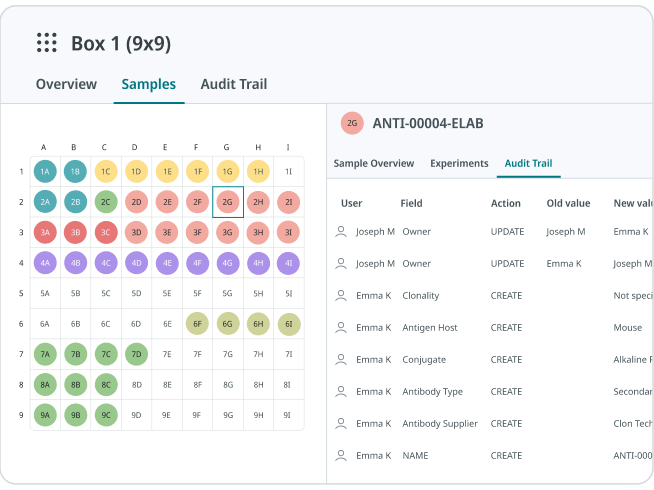
See the full history of any sample

SciSure’s LIMS delivers GLP-compliant audit trails across samples, series, equipment, and experiments, which are all exportable to PDF, Excel, or CSV. This level of traceability is critical in regulated industries such as pharmaceuticals, clinical diagnostics, and manufacturing quality control.

Why many laboratories use both

As laboratories become more data-driven, many organizations find that ELN and LIMS platforms work best when used together. An ELN manages research documentation and experimental insights, while a LIMS manages configurable sample tracking and inventory operations. By combining both systems, laboratories can support flexible scientific discovery while maintaining the structured traceability that ensures efficiency, reproducibility, and compliance.

User experience & user interface

When evaluating ELN vs LIMS, functionality is only part of the equation. The user experience (UX) and user interface (UI) of a platform can significantly influence how effectively laboratory teams adopt and use the system in their daily workflows.

Researchers, lab managers, and technicians interact with these platforms constantly. If a system is difficult to navigate, requires extensive training, or slows down routine tasks, adoption can suffer regardless of how powerful the software is. For this reason, many laboratories consider usability alongside features when comparing LIMS vs ELN solutions.

SciSure Health & Safety
Bring consistency to daily lab operations
Standardize processes, track activity, and keep records audit-ready across teams and systems.
Talk to a specialist

User experience in ELN platforms

ELNs are typically designed with researchers in mind. Their interfaces often resemble familiar notebook-style layouts, making them intuitive for scientists who are used to documenting experiments in traditional paper notebooks.

Many electronic lab notebook platforms prioritize flexibility and ease of documentation. Common user experience features include:

  • Notebook-style experiment entries that mirror traditional lab workflows
  • Drag-and-drop data uploads for images, spreadsheets, and instrument outputs
  • Easy editing and annotation of experimental records
  • Full-text search capabilities to quickly locate experiments and results
  • Collaboration tools that allow teams to share notes and comment on experiments

Because research workflows can change frequently, ELN interfaces are generally designed to be flexible and adaptable to evolving experiments.

User experience in LIMS platforms

LIMS software is typically built around structured workflows and configurable processes. The interface focuses on efficiency, sample tracking, and task management. Users often interact with LIMS platforms through dashboards and workflow modules. These interfaces commonly include:

  • Sample registration and tracking dashboards
  • Data entry forms connected to configurable protocols
  • Automated notifications and status updates via Triggers & Automations
  • Reporting and analytics views for operational monitoring
  • Task assignment and automation management tools

While this structure may feel more defined compared to ELNs, it ensures consistency in laboratories that process large volumes of samples or operate under strict regulatory requirements.

Ease of adoption across laboratory teams

Laboratories often include a mix of scientists, technicians, quality assurance specialists, and data managers. ELNs tend to be easier for researchers to adopt because they support flexible documentation and experimental exploration. LIMS platforms are often preferred by laboratory operations teams who need reliable configurable sample tracking, traceability, and standardized reporting.

To address these differences, many organizations now deploy ELN and LIMS together, allowing research teams to work in an intuitive documentation environment while operations teams manage configurable sample tracking and inventory through LIMS.

Why does usability matter in digital lab platforms?

User experience plays a critical role in the success of digital laboratory systems. A well-designed interface can improve productivity, reduce training time, and encourage consistent use across the organization. Modern laboratory platforms increasingly prioritize usability by offering customizable dashboards, intuitive navigation, and integrations with existing lab tools. When evaluating ELN vs LIMS, laboratories should consider not only the capabilities of each system but also how easily their teams can integrate the software into everyday workflows.

When should you choose LIMS over an ELN?

A LIMS is usually the better option when your lab needs to manage high sample volumes with structured, configurable tracking. Here are the clearest signals:

  • High sample volumes: Labs that register, track, and dispatch large numbers of samples, like biobanks, clinical labs, and QC facilities, benefit from a LIMS designed to manage sample series, check-out/check-in, and bulk operations efficiently.
  • Compliance and audit readiness: If your lab follows GLP or other regulatory standards, a LIMS with complete, exportable audit trails across samples, equipment, and experiments is essential for maintaining data integrity.
  • Equipment and supplies management: Centralized equipment validation tracking, expiration alerts, booking, and a procurement pipeline (Pending → Ordered → Received → Completed) reduce operational overhead.
  • Sample dispatch between teams: Labs that transfer samples across groups need the custody tracking that dispatch with accept/deny workflows and full audit trails provides.
  • Automated alerts and inventory monitoring: Triggers & Automations let labs set expiration alerts, stock-level notifications, and auto-task creation, reducing manual follow-up and human error.

Aligning the system with your team’s workflow is crucial. A LIMS will better support your operations if configurable sample tracking and automation are more important to you than open-ended experiment documentation.

What makes ELN the right choice for your laboratory?

If your primary focus is documenting experiments, organizing research notes, and managing protocols, an ELN is often the better choice.

ELNs support flexible workflows, making them well-suited for research environments where experiments evolve. They also make collaboration easier by allowing teams to share observations, results, and documentation across projects.

Team collaboration in ELNs

This is especially relevant in biotech and pharmaceutical R&D, where early-stage research requires adaptability alongside structured recordkeeping.

When making this decision, it is useful to involve the people who will use the system daily and evaluate how they plan to work. If your team needs flexibility, collaboration, and structured experiment documentation, an ELN will be the stronger fit.

Budget can also play a role. ELNs and LIMS often follow different pricing models, so reviewing available options and comparing costs helps ensure the system aligns with your lab’s needs.

Which factors should guide your lab management software decision?

Choosing between ELN and LIMS depends largely on how your laboratory operates and the type of data you manage. While both systems support digital lab workflows, they serve different purposes. Evaluating a few key factors can help determine whether LIMS vs ELN is the right fit for your lab.

Key considerations include:

  • Type of work: Research-driven labs often benefit from an electronic lab notebook for documenting experiments and protocols, while biobanking, QA, and clinical labs typically rely on LIMS software for configurable sample tracking and operational efficiency.
  • Sample volume: Labs processing large numbers of samples generally require LIMS to manage tracking, automation, and reporting efficiently.
  • Regulatory requirements: Highly regulated environments may need the GLP-compliant audit trails and traceability that LIMS provides.
  • Integration needs: Modern laboratories connect multiple systems, so compatibility with instruments and other software should be considered.
  • Future scalability: As labs grow, they may expand from using only ELN or LIMS to implementing ELN and LIMS together to support both research documentation and configurable sample management workflows.

Carefully evaluating these factors helps laboratories select a solution that supports both their current needs and long-term goals.

How do LIMS and ELN work together with expert integration?

While laboratories often compare ELN vs LIMS as separate solutions, many modern labs use both systems together. When properly integrated, LIMS and ELN complement each other by supporting different parts of the scientific workflow.

An electronic lab notebook helps researchers document experiments, observations, and protocols, while LIMS software manages configurable sample tracking, inventory, and reporting. SciSure’s key differentiator is that ELN and sample/inventory management exist within a single platform, with no middleware required.

Samples link directly to ELN experiments. Equipment records connect to ELN entries. This creates a connected environment where research documentation and operational workflows remain aligned without manual data transfers or integration overhead.
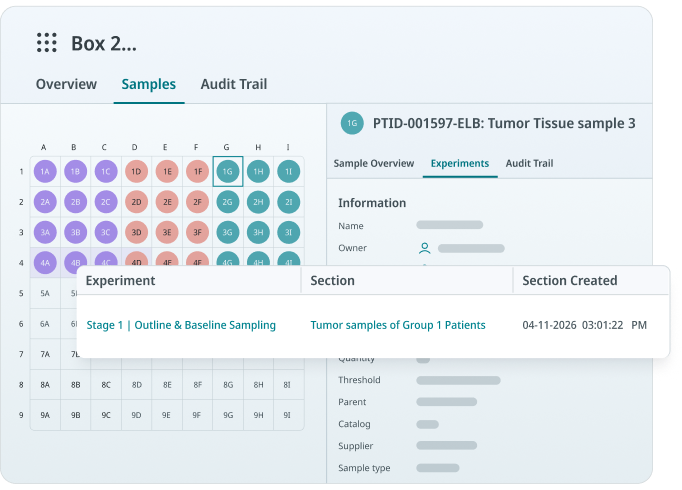
Trace samples back to their source experiments

For teams that need to connect with external systems, SciSure’s open API, SDK, and Marketplace provide pre-built add-ons and instrument integrations, along with webhook support for Slack, Teams, and other tools.

By combining ELN and LIMS in a unified platform, laboratories can:

  • Connect experimental records with sample metadata
  • Reduce manual data entry and transcription errors
  • Maintain complete traceability from experiment design to results
  • Automate alerts, tasks, and notifications across research and operations teams
  • Extend the platform via API/SDK and Marketplace without building custom middleware
SciSure Research
Connect research and operations in one platform
Link experiments, samples, and workflows without manual handoffs or disconnected systems.
Request a demo

ELN or LIMS: Webinars

The webinar will provide an outline of the differences between LIMS and ELNs, and how to decide which one is more suitable for your lab.

You will learn:

  • What is the difference between LIMS and ELNs?
  • How to choose which one best suits your lab?
  • What are the advantages of ELNs?

Future trends in laboratory data management

As laboratories continue to digitize their workflows, the role of ELN and LIMS systems is evolving. Modern platforms are increasingly designed to work together, helping laboratories manage both experimental documentation and configurable sample management within connected digital environments.

Several trends are shaping the future of LIMS vs ELN platforms:

  • Greater system integration, allowing laboratory instruments, data platforms, and lab software to exchange information automatically
  • Cloud-based platforms improving accessibility and collaboration across research teams
  • Advanced data analytics, enabling laboratories to extract insights from large experimental datasets
  • AI-driven solutions, helping automate data analysis, tracking optimization, and research documentation

As these technologies mature, laboratories will increasingly adopt integrated ELN and LIMS solutions that support efficient data management, improve reproducibility, and accelerate scientific discovery.

The right lab software starts with the right question

Ultimately, the choice between a LIMS and ELN will largely depend on what you’re trying to accomplish, your primary lab needs, your work and regulatory environment, and your budget. Understanding what each system does can drastically help guide your decision. And as the next generation of connected digital lab software and AI-driven solutions enter the life science market, the problems that can be solved using these platforms will evolve and change, further streamlining laboratory operations.

Many laboratories today implement ELN and LIMS together to manage both experimental documentation and configurable sample workflows within a unified platform.

If you want to learn more about how SciSure’s digital lab solutions accelerate progress in the life sciences industry, schedule a personal demo today.

FAQ

Which types of laboratories can gain from LIMS?

Many laboratories benefit from implementing LIMS software, particularly those that manage large numbers of samples or follow standardized workflows. Clinical laboratories, quality control labs, environmental testing facilities, and biobanks commonly rely on LIMS to track samples, automate alerts and tasks, and maintain accurate records. These systems help ensure consistency, traceability, and regulatory compliance in environments where configurable sample management is essential.

Do LIMS support integration with other systems?

Yes, most modern LIMS platforms are designed to integrate with other laboratory tools and systems. SciSure’s LIMS connects with laboratory instruments, data analysis software, inventory systems, and external platforms via an open API, SDK, and Marketplace with pre-built add-ons. Webhook integrations with Slack and Teams allow automated notifications to flow into the tools your team already uses. Integration allows laboratories to automate data transfer, reduce manual entry, and maintain consistent records across different systems.

How do I select the appropriate LIMS for my laboratory?

Selecting the right LIMS software begins with understanding your laboratory’s workflows, data management needs, and regulatory requirements. Laboratories should evaluate factors such as sample volume, integration capabilities, scalability, and ease of use. Many organizations also compare how ELN vs LIMS platforms support their processes, especially if both research documentation and configurable sample and inventory management are required. Choosing a system that aligns with both current needs and future growth can help ensure long-term success.

Ready to see SciSure in action?

Get a personalized demo and see how SciSure fits your lab's workflows.
Request demo

No commitment · Free consultation

Every scientist knows the frustration of digging through Excel spreadsheets and paper notebooks in search of experimental data, forgotten details, or reagent locations. As we’ve discussed before, digitizing your lab is how to get around these troubles.

However, understanding the different digital lab systems and their acronyms can be confusing.

You may have noticed that most digital platforms for the life sciences fall into two categories: Laboratory Information Management Systems (LIMS) and Electronic Lab Notebooks (ELN). On paper, they sound the same, but there are major distinctions between them. In this blog post, we’ll explore ELN vs LIMS, explain how the systems differ, and provide guidance to help you choose the right solution for your lab.

ELN vs LIMS: Everything you need to know

Understanding how ELN and LIMS function helps laboratories align tools with research, sample management, and compliance workflows.

Table comparing ELN vs LIMS

What is an ELN?

An ELN is a software platform designed to record and manage data, observations, sample information, and experimental methods that one would conventionally record in a paper lab notebook. ELNs are an excellent solution for keeping up with growing regulatory pressures to maintain data integrity and security. Moreover, they allow you to easily collaborate with team members, record experimental observations, integrate with instruments, create detailed reports, and search using simple keyword queries.

Benefits of Using an ELN

  • Searchability: Given their digital nature, entries into ELNs are easily searchable, which makes them very time-efficient.
  • Easy collaboration: ELNs allow labs to share data, notes, and images with colleagues, making it an excellent solution for working on projects and experiments with a team.
  • Security: ELNs allow for digital signatures, so sign-off on projects and experiments can be done easily and securely.
  • Traceability: ELNs provide a comprehensive audit trail of all actions taken within the system, making it easy to track who has done what and when.
  • Standardization: ELNs can include a protocol module, enabling you to set up individual or group working templates, making it easy to standardize processes and workflows.
Example of experiment documentation structured in an ELN

What is a LIMS?

In contrast to an ELN, a LIMS is software designed to manage samples, configurable tracking, and laboratory operations. Modern LIMS platforms, like SciSure’s, are purpose-built for research labs, biobanking labs, and life science R&D environments where flexibility, traceability, and fast configuration matter.

Unlike traditional LIMS built for rigid manufacturing or QA/QC pipelines, a research-focused LIMS gives you the tools to define your own sample types, automate alerts and tasks via event-based triggers, manage equipment and supplies centrally, and dispatch samples between teams with a complete audit trail. This makes the LIMS vs ELN comparison especially relevant for labs that process high volumes of samples and require structured but configurable workflows.

Example of a sample and inventory management interface in a LIMS

Benefits of using a LIMS

  • Configurable sample tracking: Define custom sample types, fields, and views. Track samples via metadata, check-out/check-in, dispatch between groups, and visual lineage trees with multi-parent support.
  • GLP-compliant audit trails: Complete, exportable audit trails across samples, series, equipment, and experiments. Exportable to PDF, Excel, and CSV to support compliance and data integrity requirements.
  • Triggers & automations: Event-based automations (sample created, archived, field changed) and scheduled automations (before/after expiration, custom intervals). Actions include email notifications with smart values, webhooks to Slack/Teams, and auto-task creation, with pre-built templates to get started quickly.
  • Barcode automation: Perform single-sample, multi-sample, and chained actions in a single scan. Supports rack scanning via VisionMate, RackScan, and BioMicroLab for high-throughput sample handling.
  • Equipment management: Custom fields, validation tracking with expiration alerts, booking and planner functionality, status management, and audit trail export.
  • Supplies & ordering: Built-in product catalog and shopping list with a full procurement pipeline (Pending → Ordered → Received → Completed).
SciSure Research
Manage samples and workflows with structure
Track samples, automate tasks, and maintain full traceability across lab operations.
Request a demo

ELN vs LIMS: Where each fits within a lab's process

While ELNs and LIMS are both digital software platforms for laboratory data management, the two have significant differences. ELNs are designed for many of the same functions as traditional paper notebooks — recording experimental protocols — with the added benefits of searchability, data organization, and collaboration tools. LIMS platforms focus on configurable sample tracking, inventory management, and operational efficiency. They are typically used by labs that manage large numbers of samples and require structured but adaptable workflows.

Where each system fits in your lab

Features comparison

When comparing ELN vs LIMS, one of the most practical ways to understand the difference is by looking at the core features each system provides. While both platforms help laboratories manage scientific data digitally, they are built to support different aspects of laboratory work.

An electronic lab notebook is primarily designed to support research documentation and experiment tracking, while LIMS software focuses on configurable sample tracking, inventory management, and operational efficiency. Many modern laboratories evaluate LIMS vs ELN based on which feature set best supports their daily activities.

Capability ELN LIMS
Experiment documentation
Sample lifecycle tracking
Automation Limited Triggers & Automations, Barcode Automation, API/SDK
Collaboration Limited
Data structure Flexible Configurable
Compliance support Audit trails GLP-compliant audit trails, configurable tracking

Experiment documentation and research records

ELNs are designed to capture experimental workflows, observations, and research notes in a structured digital format. Scientists can document experimental procedures, record results, attach images or files, and maintain a complete history of their research activities.

Attach multiple data types to an experiment in an ELN

Key ELN capabilities include:

  • Recording experimental protocols and procedures
  • Capturing observations, notes, and results
  • Attaching datasets, images, and instrument outputs
  • Creating searchable experiment records
  • Supporting collaboration between researchers

This functionality makes ELNs particularly valuable in research-driven environments such as academic laboratories, biotechnology companies, and early-stage drug discovery teams where experiments evolve frequently.

Sample and workflow management

LIMS platforms are built to manage samples and laboratory operations at scale. Rather than focusing primarily on experiment documentation, LIMS systems provide configurable lifecycle tracking via metadata, check-out/check-in, dispatch between groups, and barcode automation, all tied to a complete audit trail.

Keep detailed inventory of all your samples and consumables

Typical LIMS capabilities include:

  • Custom sample types, fields, sample series, and shareable views
  • Sample dispatch with accept/deny and full audit trail (custody transfer)
  • Check-out/check-in with user and timestamp logging
  • Visual sample lineage tree with multi-parent support
  • Inventory and reagent tracking via the Supplies module

These capabilities make LIMS well-suited for facilities that handle large sample volumes, such as clinical labs, quality control labs, and biobanks.

Automation and process control

Automation is one area where the LIMS vs ELN difference becomes particularly clear. SciSure’s LIMS delivers a powerful automation story through Triggers & Automations and Barcode Automation, working differently from rigid workflow pipelines.

Triggers & Automations allow labs to:

  • Set event-based triggers: sample created, archived, or a field changed
  • Schedule automations: before/after expiration, at custom intervals
  • Automate actions: send email notifications with smart values, fire webhooks to Slack or Teams, or auto-create tasks
  • Start quickly with pre-built automation templates

Barcode Automation enables single-sample, multi-sample, and chained actions in a single scan, with rack scanning support via VisionMate, RackScan, and BioMicroLab. The open API and SDK extend automation further to connect with external systems and instruments.

While ELNs can integrate with instruments, their primary purpose remains documenting research rather than managing automated tracking pipelines.

Collaboration and knowledge sharing

ELNs excel at supporting collaboration across research teams. Scientists can share experiment entries, comment on results, and access research history from anywhere. This creates a centralized knowledge base that helps teams build on previous experiments rather than repeating work.

By contrast, LIMS collaboration is typically more process-driven. Team members interact with the system mainly through sample assignments, dispatch workflows, and results tracking rather than open-ended research documentation.

Compliance and data traceability

Both ELN and LIMS systems support regulatory compliance and data traceability, but they approach it differently.

ELNs provide audit trails that track changes to experiment records, helping maintain research integrity and documentation transparency.

See the full history of any sample

SciSure’s LIMS delivers GLP-compliant audit trails across samples, series, equipment, and experiments, which are all exportable to PDF, Excel, or CSV. This level of traceability is critical in regulated industries such as pharmaceuticals, clinical diagnostics, and manufacturing quality control.

Why many laboratories use both

As laboratories become more data-driven, many organizations find that ELN and LIMS platforms work best when used together. An ELN manages research documentation and experimental insights, while a LIMS manages configurable sample tracking and inventory operations. By combining both systems, laboratories can support flexible scientific discovery while maintaining the structured traceability that ensures efficiency, reproducibility, and compliance.

User experience & user interface

When evaluating ELN vs LIMS, functionality is only part of the equation. The user experience (UX) and user interface (UI) of a platform can significantly influence how effectively laboratory teams adopt and use the system in their daily workflows.

Researchers, lab managers, and technicians interact with these platforms constantly. If a system is difficult to navigate, requires extensive training, or slows down routine tasks, adoption can suffer regardless of how powerful the software is. For this reason, many laboratories consider usability alongside features when comparing LIMS vs ELN solutions.

SciSure Health & Safety
Bring consistency to daily lab operations
Standardize processes, track activity, and keep records audit-ready across teams and systems.
Talk to a specialist

User experience in ELN platforms

ELNs are typically designed with researchers in mind. Their interfaces often resemble familiar notebook-style layouts, making them intuitive for scientists who are used to documenting experiments in traditional paper notebooks.

Many electronic lab notebook platforms prioritize flexibility and ease of documentation. Common user experience features include:

  • Notebook-style experiment entries that mirror traditional lab workflows
  • Drag-and-drop data uploads for images, spreadsheets, and instrument outputs
  • Easy editing and annotation of experimental records
  • Full-text search capabilities to quickly locate experiments and results
  • Collaboration tools that allow teams to share notes and comment on experiments

Because research workflows can change frequently, ELN interfaces are generally designed to be flexible and adaptable to evolving experiments.

User experience in LIMS platforms

LIMS software is typically built around structured workflows and configurable processes. The interface focuses on efficiency, sample tracking, and task management. Users often interact with LIMS platforms through dashboards and workflow modules. These interfaces commonly include:

  • Sample registration and tracking dashboards
  • Data entry forms connected to configurable protocols
  • Automated notifications and status updates via Triggers & Automations
  • Reporting and analytics views for operational monitoring
  • Task assignment and automation management tools

While this structure may feel more defined compared to ELNs, it ensures consistency in laboratories that process large volumes of samples or operate under strict regulatory requirements.

Ease of adoption across laboratory teams

Laboratories often include a mix of scientists, technicians, quality assurance specialists, and data managers. ELNs tend to be easier for researchers to adopt because they support flexible documentation and experimental exploration. LIMS platforms are often preferred by laboratory operations teams who need reliable configurable sample tracking, traceability, and standardized reporting.

To address these differences, many organizations now deploy ELN and LIMS together, allowing research teams to work in an intuitive documentation environment while operations teams manage configurable sample tracking and inventory through LIMS.

Why does usability matter in digital lab platforms?

User experience plays a critical role in the success of digital laboratory systems. A well-designed interface can improve productivity, reduce training time, and encourage consistent use across the organization. Modern laboratory platforms increasingly prioritize usability by offering customizable dashboards, intuitive navigation, and integrations with existing lab tools. When evaluating ELN vs LIMS, laboratories should consider not only the capabilities of each system but also how easily their teams can integrate the software into everyday workflows.

When should you choose LIMS over an ELN?

A LIMS is usually the better option when your lab needs to manage high sample volumes with structured, configurable tracking. Here are the clearest signals:

  • High sample volumes: Labs that register, track, and dispatch large numbers of samples, like biobanks, clinical labs, and QC facilities, benefit from a LIMS designed to manage sample series, check-out/check-in, and bulk operations efficiently.
  • Compliance and audit readiness: If your lab follows GLP or other regulatory standards, a LIMS with complete, exportable audit trails across samples, equipment, and experiments is essential for maintaining data integrity.
  • Equipment and supplies management: Centralized equipment validation tracking, expiration alerts, booking, and a procurement pipeline (Pending → Ordered → Received → Completed) reduce operational overhead.
  • Sample dispatch between teams: Labs that transfer samples across groups need the custody tracking that dispatch with accept/deny workflows and full audit trails provides.
  • Automated alerts and inventory monitoring: Triggers & Automations let labs set expiration alerts, stock-level notifications, and auto-task creation, reducing manual follow-up and human error.

Aligning the system with your team’s workflow is crucial. A LIMS will better support your operations if configurable sample tracking and automation are more important to you than open-ended experiment documentation.

What makes ELN the right choice for your laboratory?

If your primary focus is documenting experiments, organizing research notes, and managing protocols, an ELN is often the better choice.

ELNs support flexible workflows, making them well-suited for research environments where experiments evolve. They also make collaboration easier by allowing teams to share observations, results, and documentation across projects.

Team collaboration in ELNs

This is especially relevant in biotech and pharmaceutical R&D, where early-stage research requires adaptability alongside structured recordkeeping.

When making this decision, it is useful to involve the people who will use the system daily and evaluate how they plan to work. If your team needs flexibility, collaboration, and structured experiment documentation, an ELN will be the stronger fit.

Budget can also play a role. ELNs and LIMS often follow different pricing models, so reviewing available options and comparing costs helps ensure the system aligns with your lab’s needs.

Which factors should guide your lab management software decision?

Choosing between ELN and LIMS depends largely on how your laboratory operates and the type of data you manage. While both systems support digital lab workflows, they serve different purposes. Evaluating a few key factors can help determine whether LIMS vs ELN is the right fit for your lab.

Key considerations include:

  • Type of work: Research-driven labs often benefit from an electronic lab notebook for documenting experiments and protocols, while biobanking, QA, and clinical labs typically rely on LIMS software for configurable sample tracking and operational efficiency.
  • Sample volume: Labs processing large numbers of samples generally require LIMS to manage tracking, automation, and reporting efficiently.
  • Regulatory requirements: Highly regulated environments may need the GLP-compliant audit trails and traceability that LIMS provides.
  • Integration needs: Modern laboratories connect multiple systems, so compatibility with instruments and other software should be considered.
  • Future scalability: As labs grow, they may expand from using only ELN or LIMS to implementing ELN and LIMS together to support both research documentation and configurable sample management workflows.

Carefully evaluating these factors helps laboratories select a solution that supports both their current needs and long-term goals.

How do LIMS and ELN work together with expert integration?

While laboratories often compare ELN vs LIMS as separate solutions, many modern labs use both systems together. When properly integrated, LIMS and ELN complement each other by supporting different parts of the scientific workflow.

An electronic lab notebook helps researchers document experiments, observations, and protocols, while LIMS software manages configurable sample tracking, inventory, and reporting. SciSure’s key differentiator is that ELN and sample/inventory management exist within a single platform, with no middleware required.

Samples link directly to ELN experiments. Equipment records connect to ELN entries. This creates a connected environment where research documentation and operational workflows remain aligned without manual data transfers or integration overhead.

Trace samples back to their source experiments

For teams that need to connect with external systems, SciSure’s open API, SDK, and Marketplace provide pre-built add-ons and instrument integrations, along with webhook support for Slack, Teams, and other tools.

By combining ELN and LIMS in a unified platform, laboratories can:

  • Connect experimental records with sample metadata
  • Reduce manual data entry and transcription errors
  • Maintain complete traceability from experiment design to results
  • Automate alerts, tasks, and notifications across research and operations teams
  • Extend the platform via API/SDK and Marketplace without building custom middleware
SciSure Research
Connect research and operations in one platform
Link experiments, samples, and workflows without manual handoffs or disconnected systems.
Request a demo

ELN or LIMS: Webinars

The webinar will provide an outline of the differences between LIMS and ELNs, and how to decide which one is more suitable for your lab.

You will learn:

  • What is the difference between LIMS and ELNs?
  • How to choose which one best suits your lab?
  • What are the advantages of ELNs?

Future trends in laboratory data management

As laboratories continue to digitize their workflows, the role of ELN and LIMS systems is evolving. Modern platforms are increasingly designed to work together, helping laboratories manage both experimental documentation and configurable sample management within connected digital environments.

Several trends are shaping the future of LIMS vs ELN platforms:

  • Greater system integration, allowing laboratory instruments, data platforms, and lab software to exchange information automatically
  • Cloud-based platforms improving accessibility and collaboration across research teams
  • Advanced data analytics, enabling laboratories to extract insights from large experimental datasets
  • AI-driven solutions, helping automate data analysis, tracking optimization, and research documentation

As these technologies mature, laboratories will increasingly adopt integrated ELN and LIMS solutions that support efficient data management, improve reproducibility, and accelerate scientific discovery.

The right lab software starts with the right question

Ultimately, the choice between a LIMS and ELN will largely depend on what you’re trying to accomplish, your primary lab needs, your work and regulatory environment, and your budget. Understanding what each system does can drastically help guide your decision. And as the next generation of connected digital lab software and AI-driven solutions enter the life science market, the problems that can be solved using these platforms will evolve and change, further streamlining laboratory operations.

Many laboratories today implement ELN and LIMS together to manage both experimental documentation and configurable sample workflows within a unified platform.

If you want to learn more about how SciSure’s digital lab solutions accelerate progress in the life sciences industry, schedule a personal demo today.

FAQ

Which types of laboratories can gain from LIMS?

Many laboratories benefit from implementing LIMS software, particularly those that manage large numbers of samples or follow standardized workflows. Clinical laboratories, quality control labs, environmental testing facilities, and biobanks commonly rely on LIMS to track samples, automate alerts and tasks, and maintain accurate records. These systems help ensure consistency, traceability, and regulatory compliance in environments where configurable sample management is essential.

Do LIMS support integration with other systems?

Yes, most modern LIMS platforms are designed to integrate with other laboratory tools and systems. SciSure’s LIMS connects with laboratory instruments, data analysis software, inventory systems, and external platforms via an open API, SDK, and Marketplace with pre-built add-ons. Webhook integrations with Slack and Teams allow automated notifications to flow into the tools your team already uses. Integration allows laboratories to automate data transfer, reduce manual entry, and maintain consistent records across different systems.

How do I select the appropriate LIMS for my laboratory?

Selecting the right LIMS software begins with understanding your laboratory’s workflows, data management needs, and regulatory requirements. Laboratories should evaluate factors such as sample volume, integration capabilities, scalability, and ease of use. Many organizations also compare how ELN vs LIMS platforms support their processes, especially if both research documentation and configurable sample and inventory management are required. Choosing a system that aligns with both current needs and future growth can help ensure long-term success.

About the author:

Jon Zibell

Jon Zibell is Vice President of Global Alliances & Marketing at SciSure, where he leads strategic partnerships with organizations like The Engine (MIT), US Lab Partners, and My Green Lab to help life science and research institutions modernize lab operations. He writes about the operational, safety, and technology challenges facing modern scientific organizations. Jon holds a B.S. in Marketing & Corporate Communications from Bentley University.

See all posts from this author

Sign up for our newsletter

Get the latest tips, articles, and exclusive content on modern lab management delivered to your inbox.
Thank you for subscribing!
Please check your email to verify your submission.
Oops! Something went wrong while submitting the form.