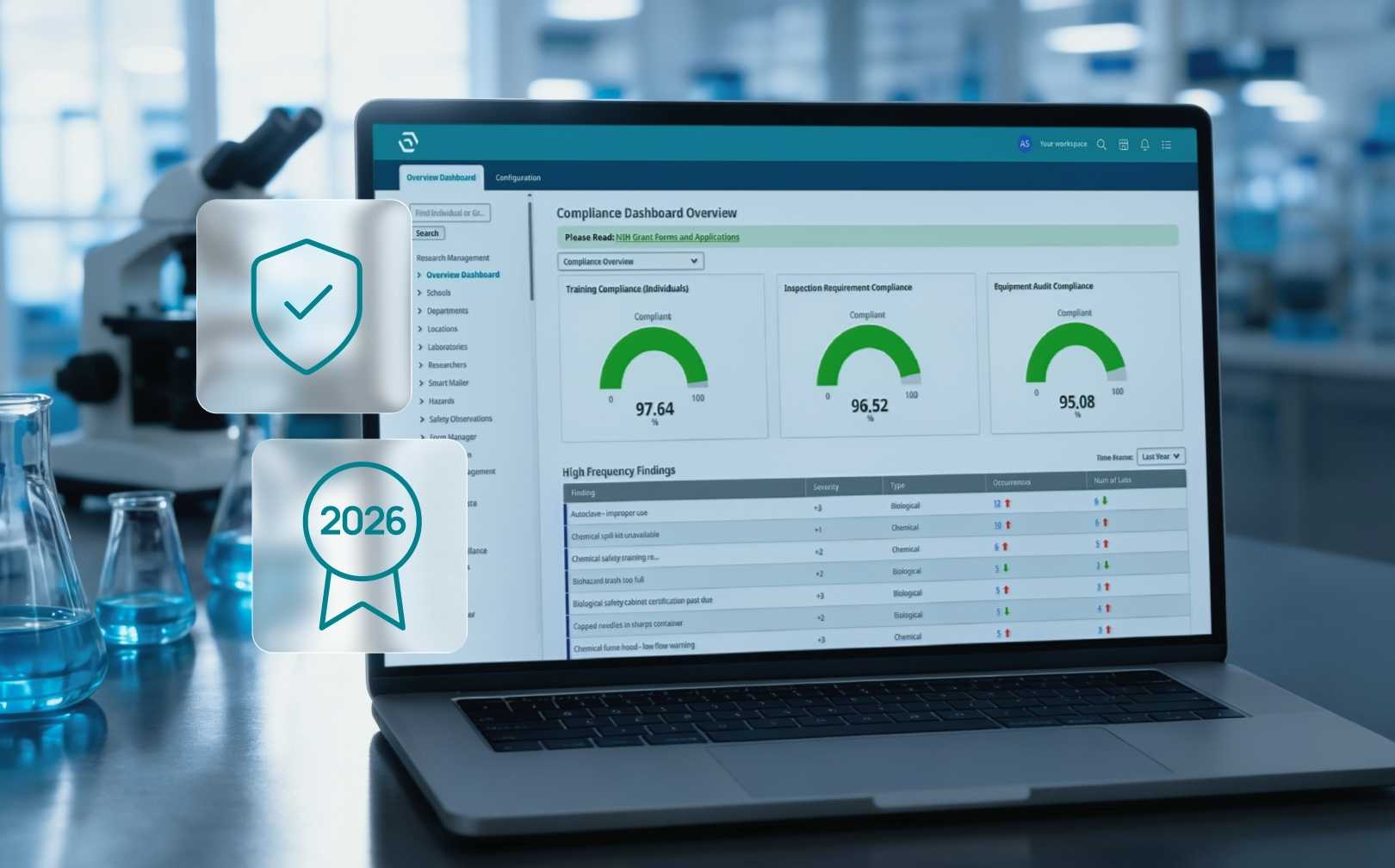
5 Issues to Look for in a Chemical Safety Management Audit
Internal chemical audits catch what regulators flag, from incompatible storage to out-of-date inventory. Here are 5 issues to check before your next inspection.

Download Whitepaper
TL;DR
A chemical safety management audit should check for five recurring problems: incompatible chemicals stored together, expired peroxide formers, flammables stored in non-explosion-proof refrigerators, out-of-date inventory, and containers that have migrated in from other lab groups.
- Storage hazards.
Audits frequently catch incompatible chemicals (acids with bases, oxidizers with flammable solvents) that can trigger fires, explosions, or toxic gas. Other recurring finds include expired peroxide formers like ethers and aldehydes that degrade into unstable explosives, and flammable solvents kept in standard rather than explosion-proof refrigerators.
- Inventory accuracy.
An out-of-date chemical inventory is the most common audit failure and the one most likely to produce a regulatory violation. Misplaced containers from other lab groups compound the problem, skewing maximum allowable quantity (MAQ) calculations per control area and leaving first responders without reliable hazard information during an emergency.
- Regulatory drivers.
Recent rules raise the stakes. OSHA's 2024 Hazard Communication Standard aligns with GHS Revision 7, with the first substance deadline now May 19, 2026. Federal EPCRA Tier II inventory reports are due March 1 (thresholds: 500 pounds or the threshold planning quantity for extremely hazardous substances, 10,000 pounds otherwise), alongside NFPA 45 and 2024 International Fire Code requirements.
- Software support.
Chemical inventory software replaces manual spreadsheets and clipboards. SciSure's ChemTracker tracks containers in real time, stores hazard and regulatory data, auto-matches Safety Data Sheets, supports barcode and RFID scanning, and generates Tier II, Right-to-Know, and Fire Code and MAQ reports directly, keeping daily records and inspection-ready data the same.
- Proven in practice.
San Diego State University shows the payoff. With SciSure's ChemTracker implemented, Director of Environmental Health and Safety Jennifer Ramil moved her team from no visibility into lab spaces or chemicals to real-time data across 99 lab groups and 500 research spaces, confirming to the Chancellor's office that 100% of chemical-use spaces had been inspected.
This post was originally published in 2018 and has been fully updated to reflect SciSure's positioning as a Scientific Management Platform, current industry research and safety benchmarks, and new customer results from San Diego State University.
Ready to see SciSure in action?
No commitment · Free consultation
Like an unannounced visit from your in-laws, chemical regulators usually show up when you're least prepared and often throw your whole operation into a panic.
One of the best ways to be prepared for a chemical regulatory inspection is to perform regular internal audits of your chemical inventory and safety management. Internal audits can help your team identify gaps in your processes, procedures, and inventory before they get flagged (and possibly fined) by an outside regulator. Internal audits can also uncover hazards that could lead to accidents or injuries. What's more, they can help your organization operate with greater efficiency on a day-to-day basis.
There's an added reason to take internal audits seriously right now: the rules underneath them have moved.
The regulatory background to chemical audits
In 2024, the Occupational Safety and Health Administration (OSHA) updated its Hazard Communication Standard to align primarily with the seventh revision of the Globally Harmonized System of Classification and Labelling of Chemicals (GHS.) Thios changed how chemical hazards get classified and written onto labels and Safety Data Sheets (SDS). The first compliance deadline for manufacturers and distributors was set for January 2026, then pushed back to May 19, 2026, with later deadlines moved out by four months too.
On top of that, the federal hazardous chemical inventory report many labs file every March, the 2024 editions of the National Fire Protection Association's lab and fire codes (NFPA 45 and NFPA 1), and the 2024 International Fire Code all lean on the same thing. I.e., an accurate, current picture of what chemicals you have and where they are. An internal audit is how you check whether that picture matches reality before a regulator does.
So which issues should you look for during an internal chemical audit? Each organization will look a little different depending on the types of research performed and the chemicals on site. However, there are a few common problems that pop up frequently. To help you on your next internal audit, we've compiled a list of five common issues to watch for.
5 Common issues to look for during an internal chemical audit
- Incompatible chemicals stored together
- Expired peroxide formers
- Flammables stored in a regular fridge or freezer
- Chemical inventory is out of date
- Chemicals from other groups or spaces found
1. Incompatible chemicals stored together
Internal audits can help identify these kind of critical storage issues before problems occur: acids stored with bases, or oxidizers stored with flammable solvents. Storing incompatible chemicals together can lead to fires, explosions, or hazardous gas leaks. Much of the time, these issues may be easy enough to spot that you can have several different inspectors keep an eye out for them. This both reduces the risk of accidents without creating more work for your team.
There are also some controls you can put in place to prevent these situations from happening at all. It starts with educating your user base on proper storage procedures. Make sure researchers know how to identify problematic chemical pairs, how to properly store chemicals, and what to do if they find chemicals stored incorrectly.
It also helps to remember that the hazard classes on each chemical's SDS are what tell you which pairs fight. The updated GHS-aligned labels coming through under the 2024 HazCom rule make those classes easier to read at a glance. Appointing a point person in each group can help confirm these procedures are being followed and provide some much-needed accountability.

Add to that a good chemical inventory system that gives you real visibility, and you'll be well-positioned to pass your next compliance inspection. A system that stores hazard and regulatory data alongside each container, like SciSure's ChemTracker, makes incompatibilities easier to catch, because you can sort and review chemicals by hazard class and storage group instead of reading every label on every shelf.
Read More: The 5 Best EHS Software Platforms in 2026
2. Expired peroxide formers
While peroxide formers are stable under normal conditions, expired peroxide formers can degrade and become unstable explosive materials. Like any hazardous chemical, expired peroxide formers need to be identified and disposed of properly. This includes peroxide formers that are opened without "date opened" marked on the bottle.
As we said before, the hallmark of an effective chemical safety management program is education. Make sure everyone who uses peroxide formers (or works in a lab where they are used) has been trained on the correct procedures for adding dates, checking dates, and disposing of expired chemicals.
The right chemical inventory system helps you both locate peroxide formers, and also stores information about containers and users, manages training, and sends reminders about proper handling procedures. It also keeps the current SDS attached to the container, which matters more than it used to. As manufacturers reissue Safety Data Sheets under the 2024 HazCom update, you want the latest hazard information sitting with the actual bottle, not buried in a document folder somewhere.
Handling peroxide formers well comes down to tracking, training, and timing, and a system that ties those together makes the rest of your chemical safety program easier to run.
3. Flammables stored in a regular fridge or freezer
Another common (and dangerous) issue frequently seen in research spaces is flammable substances, such as ether, stored in a conventional fridge or freezer instead of an explosion-proof one. Sometimes, this happens because a particular lab doesn't have an explosion-proof fridge or freezer. Other times, it's an oversight, a lack of knowledge, or simple complacency ("This chemical doesn't really need to be stored in that fridge down the hall, does it?").
This is also where the fire code comes in. NFPA 45, the National Fire Protection Association's standard for labs that use chemicals, and the building and fire codes your local authority enforces set limits on how flammables are stored. They also drive the maximum allowable quantity (MAQ), which is the amount of a hazardous material you can keep in a given space before extra fire protection measures are required. Those limits shift with the building: floor level, sprinklers, and approved storage cabinets all change the math. A quantity of flammable liquid that's fine in one lab can put another lab over its limit, so improper cold storage creates both a safety problem, while also quietly pushing a control area out of compliance.
It's worth adding this item to your regular inspection checklist so it doesn't get overlooked. You can also assign self-inspections to members of a group to specifically check for this issue. Making this the lab personnel's responsibility improves awareness and accountability.
Your equipment tracking system should help you quickly locate labs that don't have an explosion-proof fridge or freezer, and you can cross-reference that with the information from your chemical inventory system to identify the labs that also appear to have flammable substances that should be refrigerated.
When you inspect these labs, you can quickly double-check the regular fridge or freezer to make sure there aren't any flammables stored improperly, and talk to the lab members to see if there is anything you can do to help them store their chemicals safely.

4. Out-of-date chemical inventory
Whatever the reason, if your internal audits don't catch out-of-date chemical inventory, it can lead to a serious violation or fine from a regulator depending on the infraction.
It's also the issue most likely to surface in your regulatory reporting. Many labs have to file a federal Tier II hazardous chemical inventory report by March 1 each year, submitting it to their state emergency response commission, their local emergency planning committee, and their local fire department. The reporting thresholds are lower than people often assume: EPA guidance sets them at 500 pounds or the threshold planning quantity (whichever is lower) for extremely hazardous substances, and 10,000 pounds for most other hazardous chemicals.
The form itself asks for the maximum and average daily amounts you had on hand during the year, how each chemical is stored, and where it's located. If your inventory is stale, your Tier II report is wrong, and that's exactly the kind of mismatch an inspector or emergency planner will notice.
As with most things, an ounce of prevention is worth a pound of cure. In the same way that it's much easier to keep your house clean if you put your dishes in the dishwasher after every meal instead of letting them pile up, it'll be much easier to keep your chemical inventory tidy if you have routine workflows for entering and updating information.
To do that, you'll need a chemical inventory system that can accurately quantify your inventory and also let scientists and inventory specialists access, manage, and share information. When it comes to chemical inventory, the volume of work is simply too large to rely on hacked-together systems that aren't carrying a great deal of the administrative burden for you.
5. Chemicals from other groups found
A container sitting in the wrong room throws off your MAQ count for both spaces, and it leaves your emergency responders with a hazard they don't know about. When a fire marshal or first responder asks what's in a given control area, the honest answer needs to match what's physically on the shelf. At best, containers get misplaced and people waste time looking for what they need. At worst, hazardous materials end up unaccounted for or "temporarily" stored in a dangerous location.
Each chemical should have a designated storage area and be returned there after use. Of course, that's easier said than done. Regular reminders can help researchers remember to put things back, and they can also help build better habits over time. By automating these reminders with chemical inventory software, you can dramatically improve compliance.
Regular internal audits can also help to uncover chemicals that are out of place. However, taking inventory with a pen and clipboard can be a time-consuming exercise, especially if you have hundreds or thousands of containers. Using chemical inventory software along with barcoding or radio-frequency identification (RFID) speeds up the process and makes auditing far more sustainable.
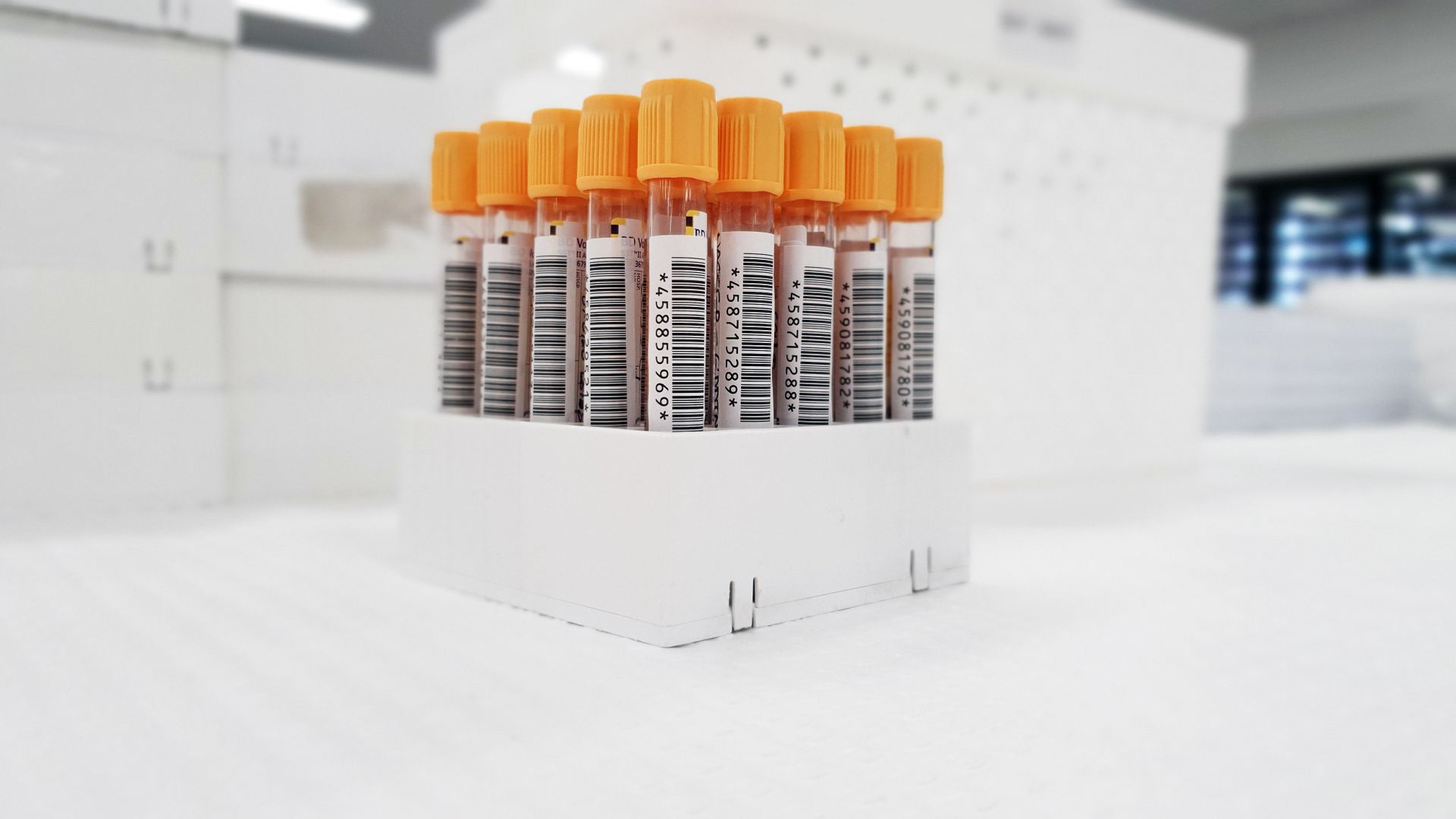
This is another good place to use self-inspections, since the personnel in research spaces might have an easier time recognizing when that tub of salts they borrowed or lent out last week wasn't returned.
What audit preparedness looks like in practice: San Diego State University
It's one thing to talk about audit readiness in the abstract. It's another to watch a real EHS team go from flying blind to walking into an inspection with the answers ready. That was the situation at San Diego State University. Before adopting SciSure, Jennifer Ramil, the university's director of Environmental Health and Safety, was, in her words, vexed by the unknown.
"I had no idea how many lab spaces we had, or what they were working with.
She could have spent months compiling that picture by hand, but as she put it, the minute it was generated it would be out of date. "It was out of date yesterday."
Her team started with the SciSure platform and door signs, then added ChemTracker and Safety Data Sheets, followed by hazardous waste and radioisotope management. The new visibility surfaced exactly the kind of finding an internal audit is meant to catch. One of the first reactions Ramil recalls was a blunt, "Wow, didn't know that chemical was stored in that particular building, which is not sprinklered." The difference was that now they knew, and could act on it.
With real-time, accurate information about labs, occupants, and hazards, the team could finally answer the questions inspectors and administrators ask. Across 99 lab groups and 500 research spaces, they could report to the Chancellor's office with confidence that 100% of the spaces where chemicals are used had been inspected, and identify exactly which labs were working with specific hazards. In Jennifer's words:
"Having that sort of insight, so chemicals can be stored in the appropriate places, was such a game-changer for us."
That's the practical version of audit readiness: the same chemical inventory data that keeps the lab safe day to day is the data you reach for when a regulator, fire marshal, or your own leadership comes asking. You can read the full San Diego State University story here. Here's a breakdown of their concrete results after implementing SciSure's Health & Safety features:
Acing your next audit comes from the right prep
The labs that handle inspections best are the ones that keep chemical identity, quantity, location, hazard class, and SDS data current as part of ordinary operations. So that when someone asks what you have, where it is, and what it means, the answer doesn't depend on who last opened the spreadsheet.
Internal audits might not be the most welcome, but they're a useful tool to identify common issues such as incompatible chemical storage, expired or missing chemicals, and out-of-date inventory. With the right chemical inventory management technology, you'll be better prepared for a quicker, simpler internal audit process. What once took weeks can now be done in a single day, and you end up with a safer, better-organized research environment, and a much shorter scramble the next time a report is due.
SciSure's chemical inventory system was built by scientists, for scientists. Built on a chemical database with roots at Stanford University, ChemTracker helps EHS teams keep chemical safety management accurate, connect inventory to the SDS and reporting work that sits on top of it, and produce the figures a regulator actually asks for. It scales to fit your lab, whether you're running one bench or 500 research spaces.
So if you're ready for a quicker, less harrowing chemical safety audit, get in touch with us for a personalized demo to see how SciSure fits your lab's workflows.

Read more of our blogs about modern lab management
Discover the latest in lab operations, from sample management to AI innovations, designed to enhance efficiency and drive scientific breakthroughs.